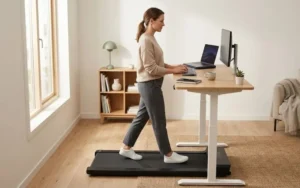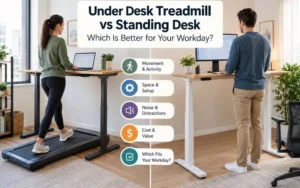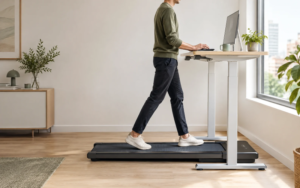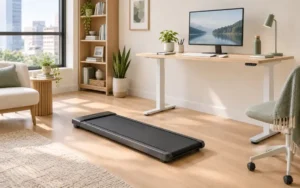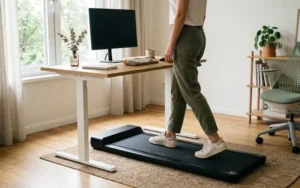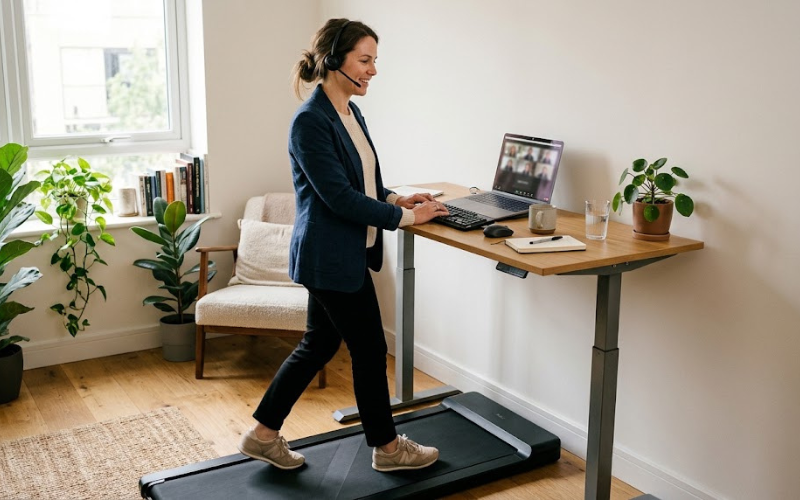
Quick answer: A quiet under desk treadmill for Zoom calls keeps three sounds low at your microphone: motor hum, footsteps and desk shake. Published readings run from about 43 to 65 dB at roughly 2 mph, taken by different people with different methods, so box ratings don’t compare. We haven’t tested any models. Check the speed, distance and meter behind any dB figure before you trust it.
How loud is an under-desk treadmill on a call?
| Source | Reading | Conditions | Caveat |
|---|---|---|---|
| LifeSpan | 50.1 dB | Desk treadmill, 2 mph | Brand-published; model not named; undated. |
| WorkWhileWalking | 57 dB | LifeSpan TR1200, 2.0 mph | Page dated December 2022. |
| WorkWhileWalking | 42.7 dB | iMovR ThermoTread GT, 2.0 mph | Same page; the site describes it as the quietest treadmill it tested. |
| WorkWhileWalking | 65 dB | Woodway DeskMill, 2.0 mph | Same page; testing method and room conditions may affect the result. |
| dbskeptic | About 60 dB | A buyer’s phone meter, 2.2 mph, TREAFLOW pad | One buyer’s reading on a roundup site; unverified. |
How to interpret these readings: Treat them as reported measurements, not a controlled head-to-head comparison. Meter accuracy, microphone distance, flooring, room acoustics, walking speed, and whether the person is walking can all affect the result. A lower decibel reading does not automatically mean a treadmill will be quieter in every apartment or home office.
Why don’t published dB numbers match?
LifeSpan lists 50.1 dB at 2 mph. WorkWhileWalking measured 57 dB on a LifeSpan TR1200 at the same speed. Neither page explains the 7 dB gap.
Ask three questions of any dB figure. At what speed? How far from the machine? Was someone walking on it?
A listing that says “as low as 40 dB” and answers none of these is a marketing number.
What do people hear: the motor, your feet or the desk?
Three sounds reach a call, by three routes.
| Sound | Route to the call | Suggested fix |
|---|---|---|
| Motor and belt hum | Through the air to your mic | Lower speed, mic closer to your mouth, noise suppression (editorial) |
| Footsteps | Through the air and the floor | Rubber-soled walking shoes (per WorkWhileWalking), lower speed |
| Desk and monitor shake | Through the desk; visible on camera | Rigid desk, separate monitor mount (per WorkWhileWalking) |
LifeSpan says the walker, not the motor, makes the most sound. WorkWhileWalking says belt and motor noise is much less noticeable at ear height than your feet hitting the belt.
It also says few people are bothered by monitor shake at lower speeds.
One catch: LifeSpan calls its numbers the treadmill’s own level, which suggests they leave out footsteps. One version of WorkWhileWalking’s page says its readings are taken at the deck. Either way, a rating may say little about footsteps at your mic.
Does walking speed change the noise?
Yes. LifeSpan’s published readings climb with speed. They are brand data for an unnamed model.
Comparison takeaway: A review that skips the speed used during noise testing is missing a major variable. Walking speed can affect measured noise levels, so compare results only when testing conditions are reasonably similar.
How do I choose a quiet model?
You can’t hear a treadmill through a product page. You can read it for clues.
Buying tip: For work calls, prioritize documented noise-test conditions, manageable beeps, easy speed controls, and a clear return policy over a generic “quiet motor” claim.
What matters most depends on how you take calls. These are editorial suggestions.
- Mostly listening, mic muted: noise matters less. Weight limit, belt width and emergency stop should decide it.
- Talking often: look for a stated dB at a stated speed, mutable beeps and a return window. Plan a separate monitor mount.
- Desk already wobbles: fix the desk or mount first. A quieter treadmill won’t stop a shaking screen.
Try a ten-minute test. This is a suggestion, not a result. If returns are allowed, record 30 seconds of speech while standing, then while walking at 1 mph and at 2 mph. Play the clips on headphones, then repeat on a call with a colleague listening.
How do I set up my desk for clean call audio?
These steps are recommendations, in rough order of payoff. Sources are named where they back a step.
- Start slow. WorkWhileWalking calls 1 to 2 mph the usual desk-walking range. We suggest the low end while talking.
- Change your shoes. WorkWhileWalking says rubber-soled walking shoes are far quieter than dress shoes, hiking boots or heels.
- Separate the monitor. If desk shake is a problem, WorkWhileWalking suggests a floor-standing or wall mount. It warns that a desk-mounted arm can amplify movement, while other guides recommend a sturdy one, so test both.
- Move the mic closer. A headset or USB mic near your mouth lets you turn the input level down.
- Set Zoom’s noise suppression. Zoom offers Auto (the default), Low, Medium and High, per Columbia University’s IT guide. A third-party guide says High can change how your voice sounds, so try it before an important meeting.
- Mute the beeps, if your model allows it.
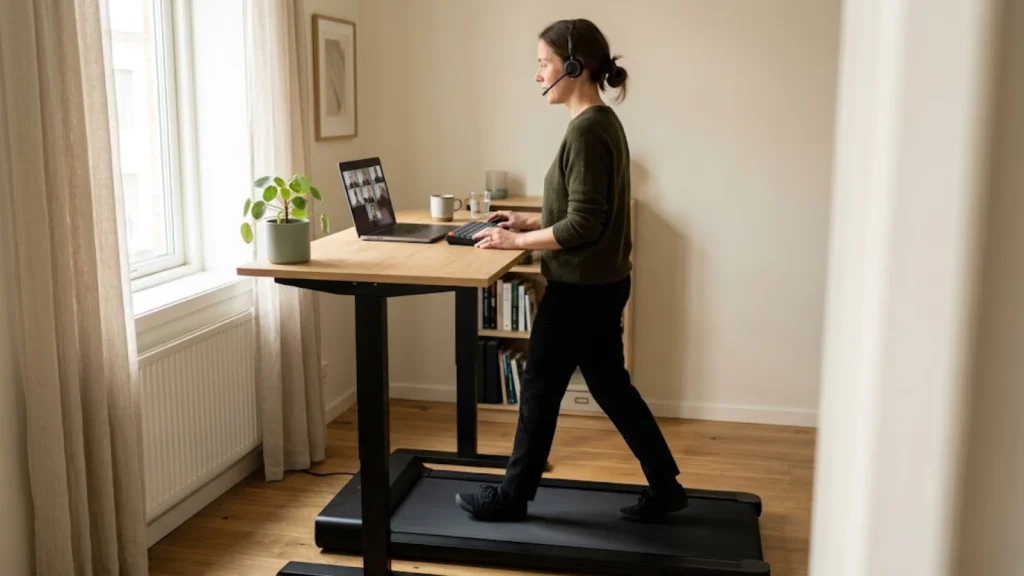
Noise-removal software such as Krisp is another option. Check its current features.
Should I walk during presentations or interviews?
We suggest not. Pause the belt and stand still.
Editorial note: This is practical editorial advice, not a measured finding. During important conversations, a stray thump or shaking screen can be more disruptive than the benefit of taking a few extra steps.
Are quiet under-desk treadmills safe?
Not automatically. Consumer Reports’ 2025 article on nine under-desk treadmills said many had serious potential safety issues, and one belt tore in a 12-hour durability test. Later CR pages say it has tested more models and recommends only some.
CR also reports that these machines usually lack handrails and that most belts it tested were narrow. On some, pulling the safety key stops the belt suddenly. It cites a Consumer Product Safety Commission report of a head injury after a sudden stop.
A CR page also reports a CPSC warning, dated April 16, 2026, telling consumers to stop using Sperax walking pads.
Before you buy, check:
- Weight limit, with room above your own weight.
- Emergency-stop behaviour, not just whether one exists.
- Belt width, and whether there is a handrail.
- Warranty. CR notes many models it didn’t recommend carry a year or less.
- Owner reviews that mention belt failure or sudden stops.
Shopping on noise alone can favour weaker builds, so read every quietness claim next to these checks.
Which models should I check?
These names came up in research. We didn’t test any, and we make no claim about how loud they are. Confirm current names and availability before linking. Sources also mention DeerRun Q1 Pro, UREVO SpaceWalk E4, LifeSpan TX6 and newer WalkingPad Hybrid+ models.
What else do people ask?
How was this guide made?
This guide combines the published sources below. We checked claims against page excerpts and ran no original tests.
- LifeSpan Europe: how quiet is a treadmill desk (brand data)
- WorkWhileWalking: how noisy is a treadmill desk (page dated December 2022)
- WorkWhileWalking: isolating noise and vibrations
- dbskeptic: quiet walking treadmills and pads (one buyer’s reading, unverified)
- Consumer Reports: best under-desk treadmills (paywalled)
- Consumer Reports: Sperax under-desk treadmill page (CPSC warning; verify at cpsc.gov)
- Columbia University IT: background noise suppression in Zoom
- Technipages: Zoom background noise suppression (third-party guide)
We left out figures from unsourced or scraped pages because we couldn’t verify them.