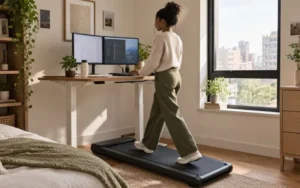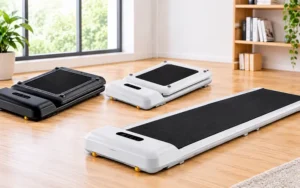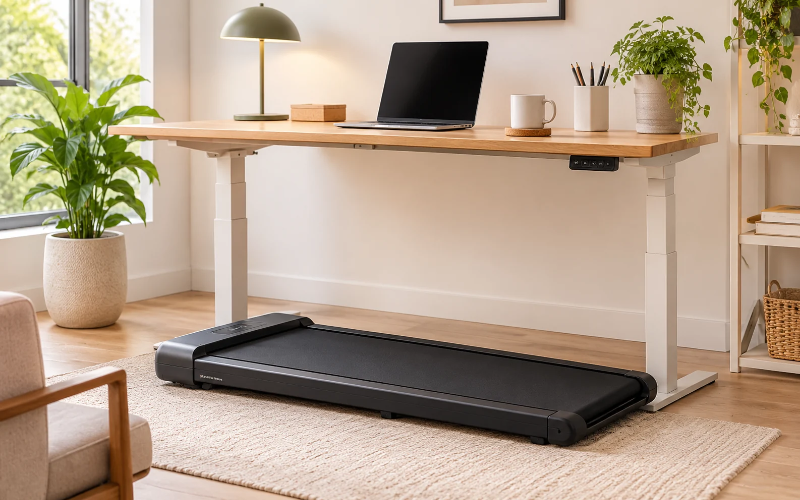
The WalkingPad A1 Pro is a good option to consider if you want a foldable walking treadmill with a wider belt and an available 300-lb weight-capacity option. Its main drawback is portability: at 63 lb, it is heavier than the WalkingPad C2 and Z1, even though all three models fold for storage.
For apartment buyers, that creates an important trade-off. The A1 Pro offers a 16.5-inch walking surface and a compact folded design, but moving it regularly requires more effort than moving a lighter walking pad.
It is best suited to people who have a reasonably permanent place for their treadmill, want additional walking-belt width or need the higher-capacity configuration.
This review examines the manufacturer’s specifications, independent reviews and practical considerations for small-space buyers. SmallSpaceStrength has not physically tested the A1 Pro.
WalkingPad A1 Pro: Quick Verdict
The WalkingPad A1 Pro is worth considering if walking-belt width and weight capacity matter more to you than minimum machine weight.
Its 47 × 16.5-inch walking area is wider than the C2 and Z1 belts. It also folds to 32.5 × 21.5 × 5 inches, making it easier to store than a conventional treadmill with a fixed deck.
However, the 63-lb machine weight changes how convenient that storage arrangement is. Folding it is straightforward, but moving it repeatedly is not the same as moving a lightweight walking pad.
The A1 Pro makes the most sense for:
- Apartment owners or renters with a designated treadmill storage area.
- Home-office workers using a standing desk.
- Buyers who prefer a 16.5-inch walking belt.
- Buyers who need the available 300-lb capacity configuration.
- People who want a treadmill that arrives fully assembled.
Consider another model if you:
- Need to carry your treadmill up stairs frequently.
- Plan to move it between rooms several times a day.
- Want incline workouts or conventional running.
- Prefer a lighter machine.
- Need handrails or more advanced workout features.
Our verdict: The A1 Pro is a better fit for buyers prioritizing walking space and capacity than those prioritizing portability. If you need to move your treadmill frequently, the Z1 deserves a closer look.
WalkingPad A1 Pro Specifications
The following specifications are taken from WalkingPad’s current U.S. product listing and comparison information.
| Specification | WalkingPad A1 Pro |
|---|---|
| Product type | Foldable walking treadmill |
| Walking surface | 47 × 16.5 inches |
| Speed range | 0.5–3.75 mph |
| Weight capacity | 230 lb or 300 lb configuration |
| Motor | 3.75 HP brushless (advertised) |
| Net machine weight | 63 lb |
| Gross weight | 69.5 lb |
| Unfolded dimensions | 56.5 × 21.5 × 5 inches |
| Folded dimensions | 32.5 × 21.5 × 5 inches |
| Incline | None listed |
| Side handles | None |
| Speed controls | Remote, KS Fit app and FootSense |
| Companion app | KS Fit |
| Assembly | Fully assembled |
| Shock absorption | EVA and PET |
| U.S. power specification | 110V |
Source: WalkingPad official U.S. product listing and comparison page. Specifications may vary by configuration and region.
Two specifications deserve particular attention.
First, the weight capacity. WalkingPad lists 230-lb and 300-lb configurations. Make sure the selected product variant matches the capacity you need. Do not assume every A1 Pro listing offers the same rating.
Second, the motor rating. WalkingPad advertises a 3.75 HP brushless motor. This is the manufacturer’s published figure, not an independently verified continuous-output measurement.
Also note that the detailed product listing specifies a maximum speed of 3.75 mph, while the comparison page rounds it to 3.7 mph. These are two presentations of the same approximate upper speed.
Is the WalkingPad A1 Pro Good for Small Apartments?
The A1 Pro can suit a small apartment if you have enough room to operate it and a suitable place to store it.
Its main space-saving feature is the folding deck. When folded, its length decreases from 56.5 inches to 32.5 inches.
That makes a meaningful difference when planning where the machine will live between walking sessions.
How Much Space Does the A1 Pro Need?
The A1 Pro has two main configurations:
| Configuration | Length | Width | Height |
|---|---|---|---|
| Unfolded | 56.5 in | 21.5 in | 5 in |
| Folded | 32.5 in | 21.5 in | 5 in |
Based on these external dimensions, the approximate rectangular footprint is:
- Unfolded: 8.4 square feet.
- Folded: 4.8 square feet.
These measurements describe the machine itself, not the additional clearance needed to operate, access or store it.
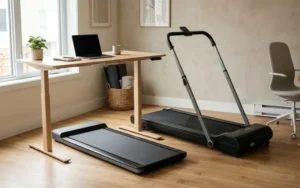
For example, someone with a small home office could position the A1 Pro beside a standing desk during working hours and fold it afterward.
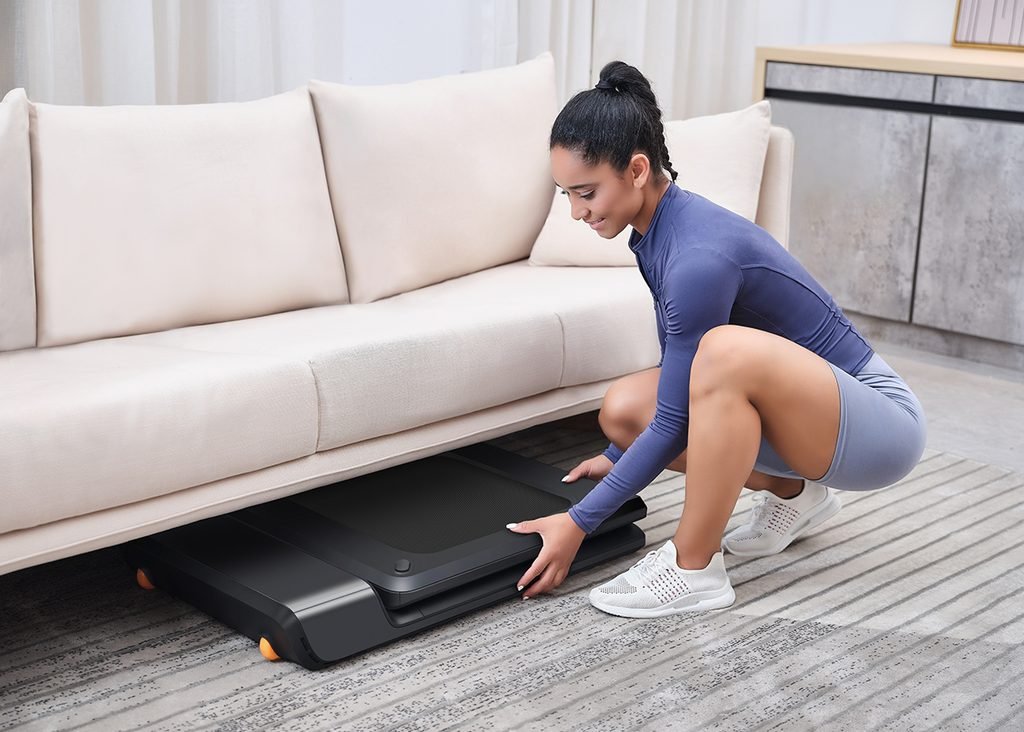
However, the folded dimensions do not guarantee that it will fit under every bed or sofa.
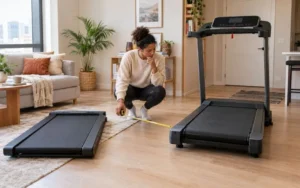
Before buying, measure:
- The clearance beneath your bed or sofa.
- The available floor space beside your desk.
- Your doorways and hallways.
- The space needed to unfold the deck.
- The route between your workout area and storage location.
The folded height is particularly important. At 5 inches, the A1 Pro may fit beneath some furniture, but you need to account for the actual opening and the shape of the folded machine.
Runner’s World reported that its review unit did not fit beneath the reviewer’s sofa. That illustrates why measuring your own furniture is more useful than relying on general claims about compact storage.
Is the WalkingPad A1 Pro Easy to Move?
The A1 Pro weighs approximately 63 lb (28.5 kg), which makes it relatively heavy for a compact walking pad.
WalkingPad includes integrated wheels to help reposition the folded treadmill. These are useful when moving it across a clear, level floor.
However, wheels do not eliminate the effort involved in lifting or carrying the machine. Stairs, narrow hallways and uneven surfaces can make relocation more difficult.
Consider two different ownership situations:
A dedicated home-office setup: You unfold the treadmill, use it during the day and leave it in the same general location. Its weight is less of a concern.
A shared living space: You fold it after every session and move it beneath furniture. Its 63-lb weight becomes a more important consideration.
The WalkingPad Z1 weighs approximately 51 lb, making it 12 lb lighter than the A1 Pro. If frequent repositioning is part of your routine, that difference deserves attention.
Is the WalkingPad A1 Pro Walking Belt Wide Enough?
The A1 Pro has a walking surface measuring 47 × 16.5 inches.
Its width is one of its more useful advantages over the WalkingPad C2 and Z1.
| Model | Walking surface |
|---|---|
| A1 Pro | 47 × 16.5 in |
| C2 | 47 × 15.7 in |
| Z1 | 47.6 × 15.8 in |
The A1 Pro provides 0.8 inches more belt width than the C2 and 0.7 inches more than the Z1.
That difference may matter if you prefer additional side-to-side room when walking.
However, a wider belt does not automatically make a treadmill suitable for every user. Your stride length, walking style and comfort on the available surface still matter.
The 47-inch belt length is also worth considering, particularly if you have a longer stride.
If you are comparing several walking pads, look at both belt dimensions rather than choosing based on the machine’s external width alone.
How Fast Does the WalkingPad A1 Pro Go?
The manufacturer’s detailed U.S. listing specifies a speed range of 0.5–3.75 mph.
This makes the A1 Pro a walking-focused machine rather than a conventional running treadmill.
The minimum speed gives you an option for slower walking, while the upper limit accommodates a brisker walking pace.
There is no incline feature listed in the current product specifications.
That distinction matters when comparing it with larger treadmills. The A1 Pro is designed around straightforward indoor walking, not a broad range of running and incline workouts.
For buyers who primarily want a walking surface beside a standing desk, the speed range may be sufficient.
If you want incline sessions, faster running or more varied training options, look beyond the A1 Pro.
How Does WalkingPad FootSense Work?
FootSense is the A1 Pro’s automatic speed-control system.
Instead of adjusting the speed manually, you control the pace through your position on the walking belt.
In automatic mode:
- Moving toward the front increases speed.
- Walking in the central area maintains a steadier pace.
- Moving toward the rear reduces speed.
You can also use manual mode with the included remote control or compatible KS Fit app.
The difference is mainly about control preference. FootSense allows position-based adjustments, while manual mode gives you more direct control over speed changes.
Tom’s Guide reported that its reviewer found automatic mode less intuitive than using the remote.
For a first-time user, starting with manual control may be the simpler approach. You can then decide whether automatic adjustment suits your walking style.
Does the WalkingPad A1 Pro Need the KS Fit App?
The A1 Pro supports the KS Fit companion app, which provides access to compatible treadmill controls and workout information.
However, the included remote means you do not have to depend entirely on your smartphone for everyday operation.
Runner’s World reported that its reviewer used the treadmill for months without the app after completing the initial setup process. The review described two ways of unlocking the full functions: walking 1 km and restarting the machine, or completing the app’s novice guide.
Check the instructions supplied with your particular model for the current setup procedure.
There is also an older app-related issue worth understanding.
In its December 2021 review, Tom’s Guide reported missing workout records and connection problems with KS Fit.
Those are historical observations, not proof that the current app has the same problems. App versions and compatibility can change over time.
If workout tracking is important to your buying decision, check current KS Fit compatibility with your phone before ordering.
Our recommendation: Consider the remote and basic treadmill controls separately from the app’s tracking features. The A1 Pro should not be purchased solely on the expectation of a particular app experience.
Is the WalkingPad A1 Pro Quiet Enough for an Apartment?
WalkingPad advertises the A1 Pro’s brushless motor as operating below 65 dB.
However, independent reviewers have reported different experiences.
Tom’s Guide described its review unit as fairly quiet during testing. Runner’s World, meanwhile, listed a maximum noise figure of 75 dB at full speed and described the treadmill as not especially quiet.
These figures come from different sources and are not directly comparable laboratory measurements. The measurement conditions, distance and testing methods have not been established as identical.
For apartment buyers, there is another important distinction: motor noise and impact noise are not the same thing.
The sound of the motor is only part of the experience. Footsteps and vibration transferred through the floor may also be noticeable, particularly in buildings with lightweight floors or shared living spaces.
If you live above another apartment, consider the following before purchasing:
- The type of flooring beneath the treadmill.
- Whether the building has noise restrictions.
- The time of day you plan to walk.
- Whether the treadmill will sit directly on a hard floor.
- Whether a suitable treadmill mat is compatible with the manufacturer’s instructions.
Do not assume that a product marketed for home or office use will be inaudible to neighbors.
What Are the Pros and Cons of the WalkingPad A1 Pro?
The A1 Pro’s strongest features are its walking-belt width, folding design and available higher-capacity configuration. Its main limitations are machine weight, lack of incline and walking-only positioning.
WalkingPad A1 Pro Pros
1. Wider walking surface
The 16.5-inch belt is wider than the walking surfaces listed for the C2 and Z1. This is useful for buyers who prioritize additional side-to-side room.
2. Folding design
The deck folds to approximately 32.5 × 21.5 × 5 inches, reducing the amount of floor space needed for storage.
3. Higher weight-capacity option
The U.S. listing offers a 300-lb configuration alongside the 230-lb option. This gives buyers a choice, provided they select the correct version.
4. Multiple speed-control methods
The A1 Pro supports remote control, KS Fit app operation and FootSense automatic speed adjustment.
5. Fully assembled delivery
The manufacturer lists the A1 Pro as fully assembled. You do not need to build the treadmill frame before use.
6. Integrated wheels
The wheels help reposition the folded machine across suitable floor surfaces.
WalkingPad A1 Pro Cons
1. Relatively heavy
At 63 lb, it is heavier than the C2 and Z1. This matters if you plan to move it frequently.
2. Limited maximum speed
Its maximum speed of 3.75 mph makes it less suitable for buyers who want conventional running workouts.
3. No listed incline
The current U.S. specifications do not include an incline feature.
4. No side handles
The A1 Pro has a low-profile walking-pad design rather than a traditional treadmill handrail setup. Buyers who need hand support should consider another model category.
5. App history deserves attention
Tom’s Guide reported KS Fit synchronization problems in its 2021 review. This does not establish a current defect, but app-dependent buyers should check compatibility.
6. Storage still requires planning
The folded dimensions are compact, but the 63-lb weight and furniture clearance can make frequent storage less convenient.
WalkingPad A1 Pro vs C2 vs Z1: Which Should You Choose?
The A1 Pro, C2 and Z1 are all foldable walking pads, but they suit slightly different priorities.
The A1 Pro focuses on a wider belt and higher available capacity. The C2 offers a lighter middle-ground option, while the Z1 is the lightest of the three.
Here is how their published U.S. specifications compare.
| Feature | A1 Pro | C2 | Z1 |
|---|---|---|---|
| Walking surface | 47 × 16.5 in | 47 × 15.7 in | 47.6 × 15.8 in |
| Machine weight | 63 lb | 55 lb | 51 lb |
| Maximum capacity | 300 lb option | 220 lb | 242 lb |
| Maximum speed | 3.75 mph | 4 mph | 4 mph |
| Folding design | Yes | Yes | Yes |
| Motor (advertised) | 3.75 HP | 3 HP | 2.25 HP |
Source: WalkingPad’s official product comparison and product listings. Check the selected configuration and regional specifications before purchasing.
WalkingPad A1 Pro: Best for Belt Width and Higher Capacity
Choose the A1 Pro if its 16.5-inch belt is more important to you than having the lightest machine.
It is also the logical choice among these three if you need the available 300-lb capacity configuration.
Its main compromise is the 63-lb machine weight.
WalkingPad C2: Best Middle-Ground Option
The C2 weighs 55 lb and has a 47 × 15.7-inch walking surface.
It is lighter than the A1 Pro while retaining a similar folding format.
Its published 220-lb weight capacity is lower than both A1 Pro configurations, so buyers should compare the ratings before choosing.
Read our WalkingPad C2 review for a closer look at its specifications, strengths and limitations.
WalkingPad Z1: Best for Lower Machine Weight
The Z1 weighs approximately 51 lb, making it the lightest of these three models.
It also has a maximum listed speed of 4 mph and a 242-lb weight capacity.
Its 15.8-inch walking surface is narrower than the A1 Pro’s 16.5-inch belt, but it may be a more practical choice if frequent repositioning is your main concern.
Which model should you choose?
- Choose the A1 Pro if you prioritize belt width and the 300-lb capacity option.
- Choose the C2 if you want a lighter alternative with a similar folding format.
- Choose the Z1 if minimizing machine weight is more important than having the widest belt.
There is no universal winner. Your required capacity, available storage space and preferred walking surface should determine the choice.
Is the WalkingPad A1 Pro Suitable for a Standing Desk?
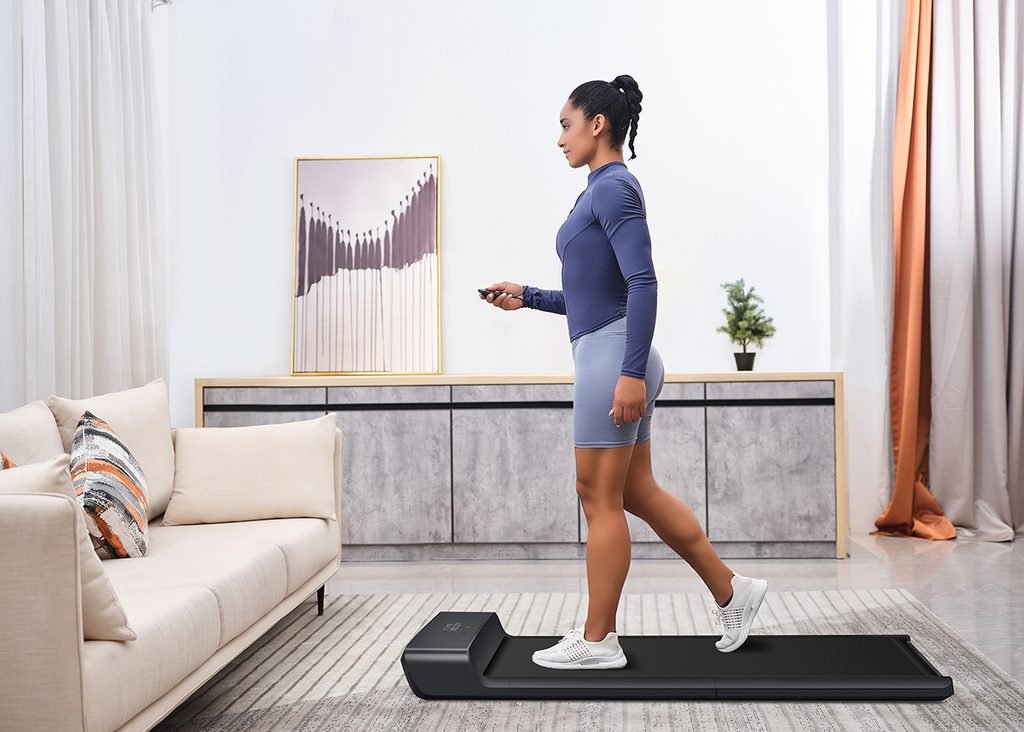
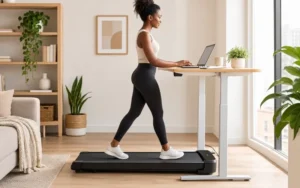
The A1 Pro is designed for walking-focused home use and can be considered for a standing-desk setup.
Its low-profile deck and remote speed controls make it a possible option for people who want to combine walking with routine computer work.
However, the treadmill alone does not determine whether your workstation will be comfortable.
Check these factors before purchasing:
Desk height: Your desk should accommodate a comfortable standing position while allowing you to walk without reaching awkwardly.
Keyboard and mouse position: Your arms should be able to reach your equipment naturally.
Monitor height: Your screen should remain at a comfortable viewing height.
Walking speed: A slower pace may be easier to combine with routine computer tasks than a brisk pace.
Available floor space: Account for the treadmill, desk legs and enough room to get on and off.
Detailed writing, design work and tasks that require precise mouse control may be easier while standing still or sitting.
If your main goal is to find a treadmill specifically for a workstation, see our guide to the best under-desk treadmills.
What Should You Know About Maintaining the WalkingPad A1 Pro?
The A1 Pro still requires routine care despite arriving fully assembled.
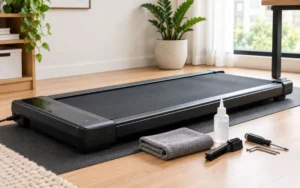
The walking belt, deck and surrounding surfaces should be kept clean, and maintenance should follow the instructions supplied with the machine.
Useful ownership checks include:
- Keep dust and loose debris away from the walking belt.
- Check whether the belt remains centered.
- Follow the manufacturer’s lubrication instructions.
- Pay attention to unusual sounds or changes in operation.
- Keep the storage area clean and dry.
- Check the power requirements before connecting the treadmill.
Runner’s World reported that its review unit needed occasional belt recentering during months of use.
That is an observation from one review unit, not evidence that every A1 Pro will require the same adjustment.
If the belt repeatedly shifts or the treadmill behaves unusually, consult the manufacturer’s troubleshooting guidance rather than making adjustments without checking the manual.
Frequently Asked Questions About the WalkingPad A1 Pro
Is the WalkingPad A1 Pro worth buying?
The A1 Pro is worth considering if you want a foldable walking treadmill with a wider belt and an available 300-lb capacity option. Its main drawback is its 63-lb weight, which makes it less convenient for frequent carrying and repositioning.
How much weight can the WalkingPad A1 Pro support?
WalkingPad lists 230-lb and 300-lb capacity configurations. Check the selected variant before ordering because the two ratings are not interchangeable.
How heavy is the WalkingPad A1 Pro?
The A1 Pro weighs approximately 63 lb (28.5 kg) without packaging. Its gross weight is approximately 69.5 lb (31.5 kg).
Can you run on the WalkingPad A1 Pro?
The A1 Pro has a maximum listed speed of 3.75 mph. It is designed primarily for walking rather than conventional running workouts.
Does the WalkingPad A1 Pro have an incline?
No incline feature is listed in the current U.S. specifications.
Can the WalkingPad A1 Pro fit under a bed?
Its folded dimensions are approximately 32.5 × 21.5 × 5 inches. It may fit beneath some beds, but you should measure the available clearance before purchasing.
Is the WalkingPad A1 Pro quiet enough for an apartment?
WalkingPad advertises a motor noise figure below 65 dB, but independent reviewers have reported different experiences. Motor noise, footsteps and floor vibration can all affect how noticeable the treadmill is.
Does the WalkingPad A1 Pro work without the KS Fit app?
The treadmill includes a remote control, providing an alternative to app-based operation. Some setup, tracking and connected features may still involve the app.
Does the WalkingPad A1 Pro require assembly?
WalkingPad lists the A1 Pro as fully assembled. You still need to unfold it, position it and connect the power according to the supplied instructions.
What is the difference between the A1 Pro and C2?
The A1 Pro has a wider 16.5-inch walking surface compared with the C2’s 15.7-inch belt. It also weighs more and offers a higher weight-capacity option.
What voltage does the U.S. WalkingPad A1 Pro use?
The current U.S. product listing specifies 110V. Buyers outside the United States should check the voltage and plug requirements of the exact regional model before connecting it to their local power supply.
Final Verdict: Should You Buy the WalkingPad A1 Pro?
The WalkingPad A1 Pro is most compelling when you want a wider walking belt, a folding deck and the option of a 300-lb weight capacity.
Its 47 × 16.5-inch walking surface is wider than the C2 and Z1, and its folded dimensions make it easier to store than a conventional fixed-deck treadmill.
But the 63-lb machine weight is the deciding compromise. If you intend to fold and move your treadmill after every session, the lighter Z1 or C2 may be more practical.
Our recommendation: Buy the A1 Pro if its wider belt and available capacity match your requirements and you have a realistic storage arrangement. Choose the Z1 if lower machine weight is your priority, or the C2 if you want a middle-ground alternative.
Before ordering, confirm the selected capacity configuration, regional voltage, current price, warranty and return conditions.
Check WalkingPad A1 Pro Price & Availability →
About this review
SmallSpaceStrength publishes research-based home fitness buying guides. Product specifications are checked against available manufacturer information, and independent testing observations are attributed to their original sources. We do not claim hands-on testing where none has been performed.
Affiliate Disclosure
SmallSpaceStrength may earn a commission when you purchase through qualifying links. This does not affect how we evaluate products, explain their limitations or make recommendations.
Sources and Specification References
- WalkingPad A1 Pro — Official U.S. Product Page
- WalkingPad — Official Product Comparison
- WalkingPad — Official Product Listings
- WalkingPad — Official FAQ
- Tom’s Guide — WalkingPad A1 Pro Review
- Runner’s World — WalkingPad A1 Pro Review
Research note: This is a specification-based review, not a hands-on test. SmallSpaceStrength has not physically tested the A1 Pro. Manufacturer specifications and independent reviewer observations are identified by their respective sources.