
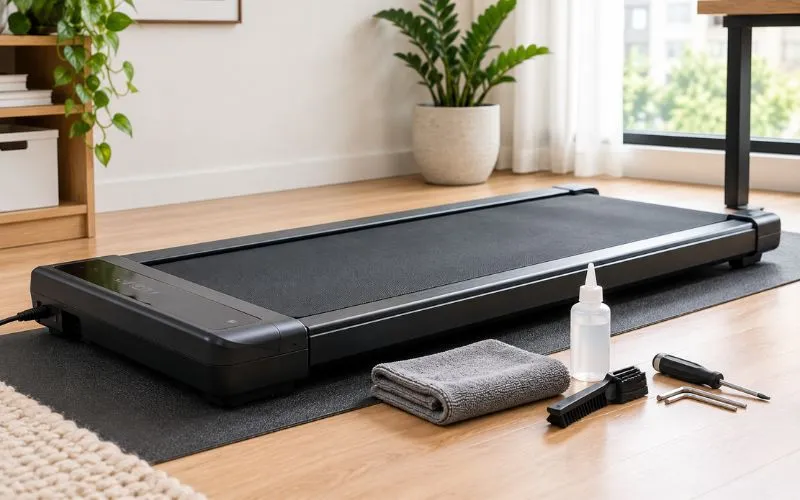
A squeaking walking pad isn’t necessarily broken — it may simply need basic maintenance. How to maintain a walking pad comes down to three routine tasks: cleaning the belt and deck, lubricating the walking surface, and keeping the belt properly aligned and tensioned. Most of these jobs take only a few minutes and don’t require a technician.
A note on specifics: Lubrication intervals, screw locations, and adjustment tolerances vary by brand and model. This guide covers the general logic behind walking pad maintenance; treat your manufacturer’s manual as the final word on specific numbers and mechanisms.
How to Maintain a Walking Pad: Quick Answer
Wipe the belt after each use. Lubricate the deck with 100% silicone oil on whatever schedule your manufacturer specifies — and check the belt’s feel and sound between scheduled lubrications, since those are better indicators than a calendar. Skip WD-40, cooking oil, and automotive grease; none are formulated for rubber or PVC belts. The machines that last longest are the ones maintained on a rhythm, not the ones fixed after something goes wrong.
Why Walking Pad Maintenance Matters
A walking pad is just a belt, a motor, and a deck — but that belt runs under constant friction, and friction generates heat. Heat and friction are the two forces that wear down belts and motors over time.
This is where usage pattern matters more than most guides admit. A 20-minute HIIT session and four hours of slow walking under a standing desk put very different total friction-time on the same belt, even though the desk session feels far less intense. If you’re walking most of your workday, don’t wait for a fixed number of months to pass — check the belt’s feel and listen for new sounds more often than someone using theirs for short daily workouts.
Addressing a worn belt or a strained motor after the fact costs more time and money than routine upkeep. A bottle of silicone oil and a few minutes beats a replacement part.
Three Parts of Walking Pad Maintenance
| Pillar | What it does | When |
|---|---|---|
| Cleaning | Removes dust/debris that increase friction | After each use, plus a periodic deeper check |
| Lubrication | Reduces belt-to-deck friction | Per your manufacturer’s schedule, adjusted for how heavily you use it |
| Belt tension | Keeps the belt centered and gliding evenly | Checked periodically; adjusted when you notice drift |
A squeaky belt is almost always a lubrication problem. A belt that drifts to one side is almost always a tension problem. Treating one as the other wastes your time.
How to Clean a Walking Pad
After every use: wipe the belt with a soft, slightly damp microfiber cloth to remove sweat and surface dust. Let it air-dry completely before folding — moisture trapped against a folded belt is worse than skipping a cleaning entirely.
Periodically: vacuum around the edges of the deck. Debris works its way in faster on carpet than on hardwood or tile, so if you’re on carpet, check more often.
Skip: all-purpose cleaning sprays and anything with solvents. They’re not needed here, and residue can interfere with lubrication later.
How to Lubricate a Walking Pad
This is the step most people skip — and the one maintenance guides most consistently flag as having an outsized effect on lifespan.
What Lubricant Should You Use on a Walking Pad?
100% silicone oil. It’s designed for belt-and-deck friction and won’t degrade rubber or PVC. Check the label if you’re buying a non-branded option — “100% silicone” is the phrase to look for.
What to avoid:
| Product | Why not |
|---|---|
| WD-40 | A solvent/penetrant, not a lubricant — can degrade belt material over time |
| Cooking oil | Breaks down, attracts dust, can go rancid |
| Automotive grease | Too thick for this application; can gum up the deck |
How to tell it’s due, without waiting on a schedule:
- Sound — a new squeak or grinding noise during use.
- Feel — unplug the machine, lift one edge of the belt, and run a hand across the exposed deck. Dry or rough means it’s due. Smooth or faintly slick means it’s fine.
Manufacturer intervals vary by brand — check yours. But treat those two signals as more reliable than the calendar, especially if you use the pad daily for long, low-speed sessions.
Applying it:
- Unplug the machine. Never lubricate while it’s connected to power.
- Wipe the belt clean first — lubricating over dust traps it against the deck instead of protecting it.
- Lift one side of the belt just enough to expose the deck underneath. Full removal isn’t necessary.
- Apply a thin line or “S” pattern of lubricant, following your product’s amount guidance.
- Reseat the belt and rotate it by hand a few times to spread the oil evenly.
- Run the machine at low speed for a minute or two before your next real workout.
Walking Pad Belt Tension and Alignment
Less is more: over-applying can make the belt slip instead of glide, and excess oil attracts more dust than it prevents. If you’re unsure, apply less than you think you need and check again after a short walk.
Signs Your Walking Pad Belt Needs Adjustment
The belt shifts to one side while you walk, or rubs against the side rails. Left alone, this wears the belt edges unevenly.
How to Adjust Walking Pad Belt Tension
Many walking pads have adjustment screws near the rear of the deck, though placement and turning direction differ by brand — check your manual before touching them. The target is smooth rotation with no resistance and no visible sag. Too loose and the belt slips under your steps; too tight and you’re straining the motor.
When to Contact the Manufacturer
If adjusting tension doesn’t fix the drift, or the belt looks physically damaged, that’s a sign of a deeper issue — motor mount, roller, or belt wear — worth a support ticket rather than continued DIY fixes.
How to Maintain a Walking Pad in an Apartment
Most maintenance advice assumes a garage or dedicated gym room. A few things change in an apartment.
Protecting Your Apartment Flooring
A thin protective mat under the pad reduces vibration transfer to hardwood or laminate and gives the machine a stable surface — worth doing in a rental, where floor damage is a deposit issue.
Keeping Your Walking Pad Quiet
A well-maintained pad runs quieter than one that’s overdue. If noise is creeping up and you share walls or floors, treat it as a maintenance signal before it becomes a neighbor complaint.
Folding and Storing Your Walking Pad
If you’re folding and storing the pad every day — more common in apartments than in dedicated gym spaces — that routine stresses hinges and latches as much as the belt does. Fold deliberately rather than forcing it, and periodically check that hinges move smoothly and latches click securely.
Preventing Moisture During Storage
Closets have less airflow than garages. Make sure the belt is fully dry before folding it away, and avoid storing it against an exterior wall prone to condensation.
How to Prepare a Walking Pad for Moving
Renters relocate more often than homeowners, so it’s worth having a move routine ready:
- Power down and unplug well ahead of moving day.
- Clean the belt fully so nothing grinds in during transit.
- Fold and secure the deck per the manufacturer’s mechanism, confirming latches are fully engaged.
- Pack it flat, as designed — not on its side or at an angle.
- Don’t stack anything heavy on top, even briefly.
Walking Pad Maintenance Troubleshooting
| Symptom | Likely cause | Try this |
|---|---|---|
| Squeaking or grinding | Dry belt or deck | Lubricate |
| Belt drags or feels sluggish | Low lubrication, or tension too tight | Check lubrication first, then tension |
| Belt slips off-center | Alignment drift | Adjust tension screws per your manual |
| Won’t power on after storage | Safety key not seated, or cold start | Reseat the key; let the unit reach room temperature |
| Runs hot after short use | Often low lubrication or restricted airflow | Lubricate, check ventilation |
Not sure whether the noise you’re hearing is normal? Compare it with how loud a walking pad should be before you start adjusting anything. If a fix doesn’t work on the first try, stop and check your manual before repeating it. Repeated troubleshooting without a clear cause tends to create new problems.
How Long Should a Walking Pad Last?
There’s no single number — it depends on the model, materials, and how hard you use it. What maintenance guides consistently agree on: skipped lubrication is the fastest route to problems, because it lets friction and heat compound with every session. A pad that’s cleaned regularly, lubricated on schedule, and kept properly tensioned will outlast one that’s ignored until it breaks.
Walking Pad Maintenance Checklist
| Frequency | Task |
|---|---|
| After each use | Wipe the belt; let it air-dry before folding |
| Periodically | Vacuum debris from around and under the deck |
| Per manufacturer schedule | Lubricate the belt, adjusted for usage |
| Periodically | Check belt tension and alignment |
| As needed | Adjust stiff hinges/latches; check mat condition |
How to Maintain a Walking Pad: FAQs
How often should I lubricate a walking pad
Check your manufacturer’s recommended interval — it varies by brand. Between scheduled lubrications, let the belt’s feel and sound tell you if it’s due early.
Can I use WD-40 on a walking pad?
No. It’s a solvent, not a lubricant, and can damage belt material. Use 100% silicone oil instead.
How do I know when it needs lubrication?
New squeaking or grinding, or a dry/rough feel when you check the deck under the belt.
How much lubricant should I use?
A thin, even layer. More isn’t better — excess oil can make the belt slip and attracts dust.
Do I need to clean the belt before oiling it?
Yes. Oiling over dust traps it against the deck and can increase friction instead of reducing it.
Why is my walking pad squeaking?
Almost always a dry belt. Lubricating it resolves this in most cases; if it doesn’t, check your manual.
How do I store one in a small apartment?
Make sure the belt is fully dry before folding, handle the folding mechanism deliberately, and avoid enclosed spots prone to condensation.


Pingback: Best Walking Pads for Heavy Users: 300 lb+ Picks (2026) - Small Space Strength